Most beginners do not stall because AI is hard. They stall because every feed suggests a new tool, a new “must-learn” skill, and a new path that supposedly works for everyone.
You do not need every skill. You need one useful skill you can practice, show, and improve. This guide helps you pick that first skill without chasing the whole internet.
What “first AI skill” actually means
A first AI skill is not “know ChatGPT.” It is a repeatable ability that helps a real person finish a real task faster or more clearly — with you still responsible for the result.
Good first skills look like this:
- You can explain it in one sentence.
- You can practice it this week with a small project.
- Someone else can notice the result (a clearer draft, a cleaner checklist, a better outline).
- You can improve it without buying a stack of new tools.
Start from a problem you already understand
Ignore trends for a moment. Ask: what problem have you already seen — at work, school, freelancing, or small business life?
Examples that work well as a starting point:
- Messy notes that need to become action lists.
- A first draft that takes too long to structure.
- A service offer that is unclear to clients.
- A simple worksheet people keep asking you to explain.
If you cannot name a problem, pick one from a world you know (students, shop owners, freelancers, office teams). Familiarity beats novelty.
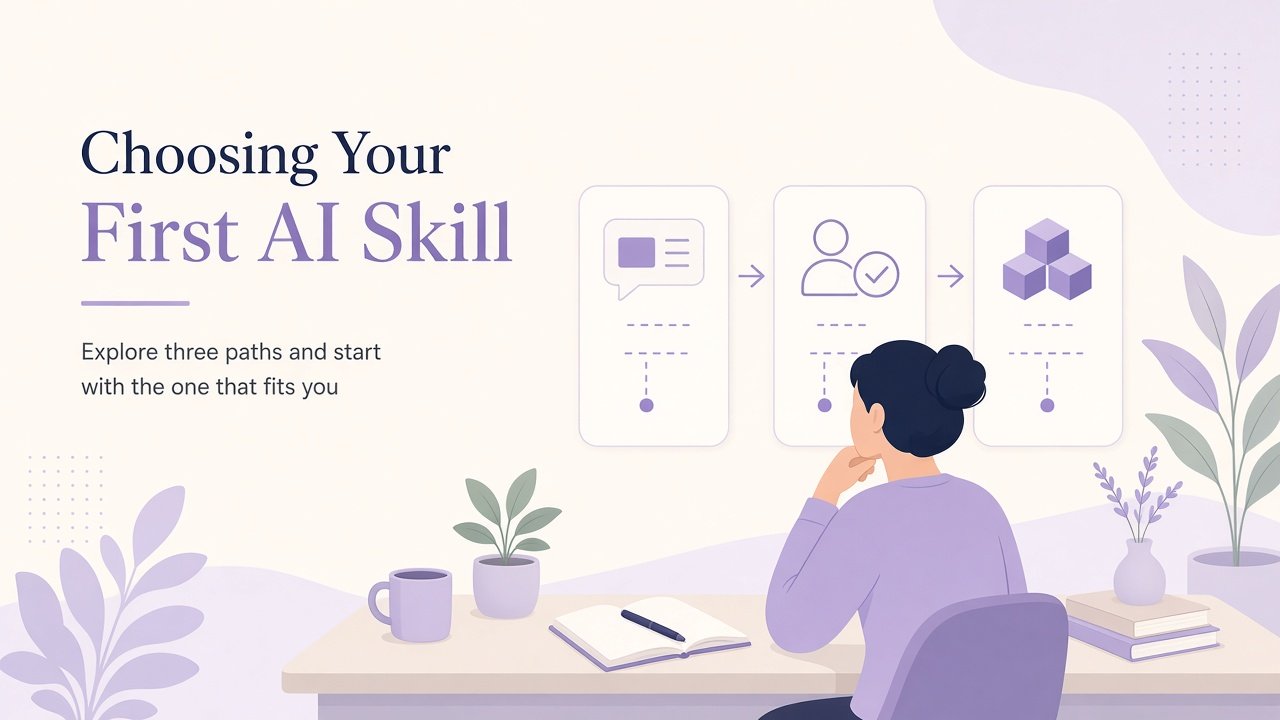
Choose one lane: content, service, or product
On How to Earn AI we keep three practical lanes. Pick one for your first skill so your practice has a destination.
1) Content creation
First skill: turn a clear brief into a useful outline and a revised draft that still sounds like you.
Why it works: you practice judgment, not just prompting. The outcome is readable work you can show.
2) Freelancing / services
First skill: deliver one small AI-assisted service end-to-end — brief → sample → feedback → revision.
Why it works: you learn scoping and delivery, which matter more than tool tricks.
3) Digital products
First skill: build a focused checklist, template, or worksheet that helps someone finish one task.
Why it works: you practice usefulness before “building a big product.”
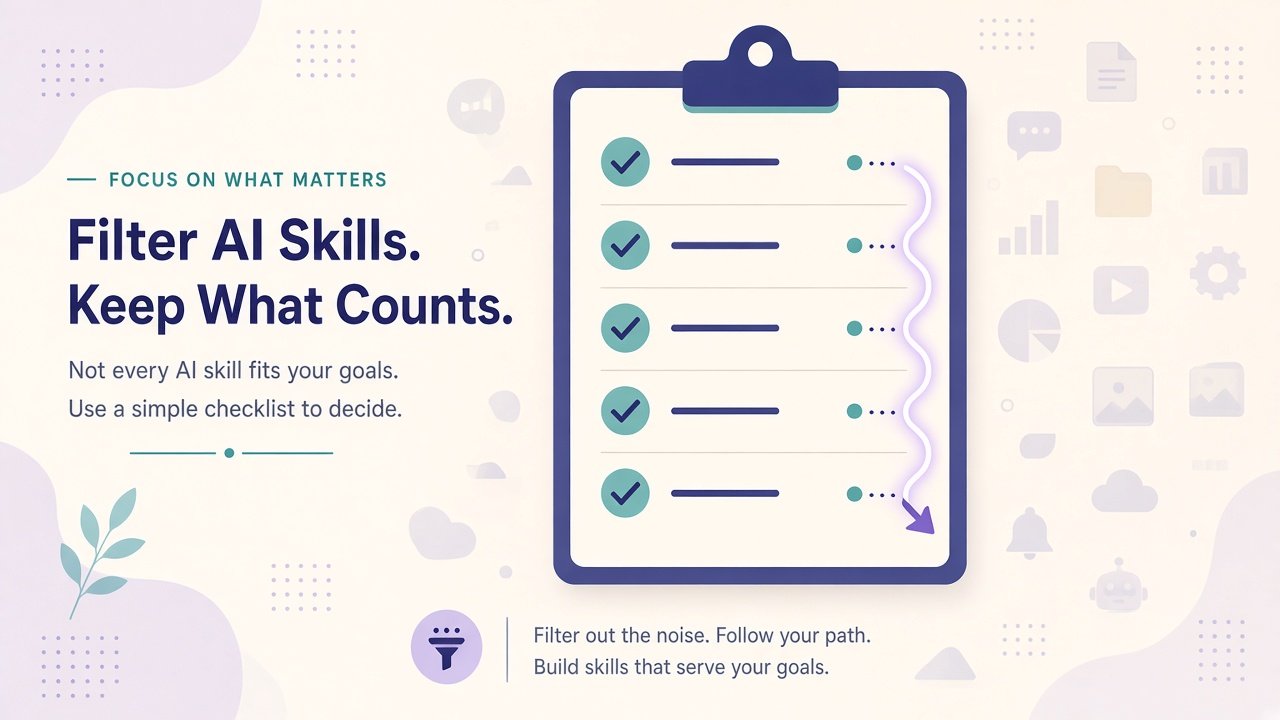
A simple decision filter
When two skills feel equally exciting, score each from 1–5:
- Familiarity: Do you already understand the audience or problem?
- Evidence: Can you make a sample this week without waiting for perfect tools?
- Feedback: Is there someone who can review the result?
- Reuse: Will the skill help more than one project?
- Honesty: Can you talk about it without exaggerated claims?
Pick the higher total. If they tie, choose the one with the easiest sample.
What to ignore (for now)
- Every new model release announcement.
- “Passive income with AI” promises.
- Learning five tools before finishing one project.
- Building a full brand before you have one useful sample.
- Comparing your week-one draft to someone else’s highlight reel.
You can explore more later. First skill first.
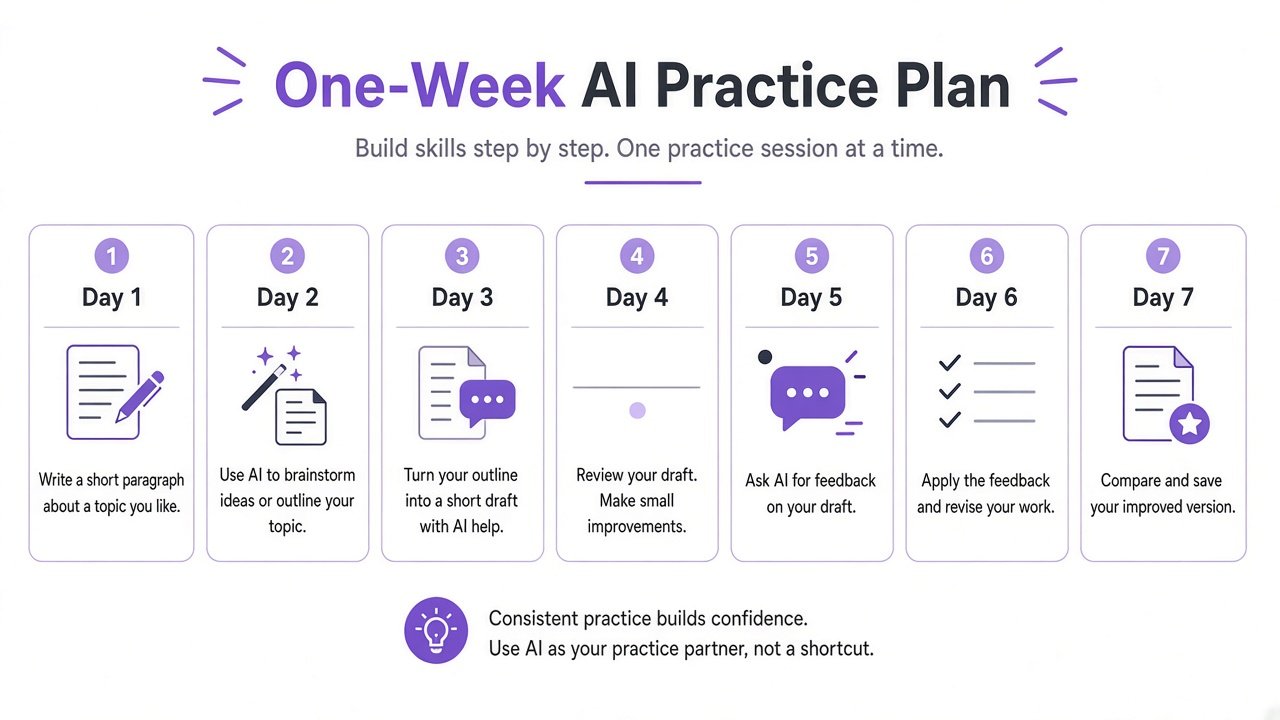
Your first-week practice plan
- Day 1: Write one sentence: the reader, the problem, and the useful outcome.
- Day 2–3: Make a small sample (outline + draft, service mini-deliverable, or one-page checklist).
- Day 4: Edit for clarity. Remove hype. Check any factual claims.
- Day 5: Ask one person for feedback on usefulness, not praise.
- Day 6–7: Improve the sample once. Save a short before/after note for yourself.
A worked example
Suppose you help small shop owners who drown in daily WhatsApp questions. A strong first skill is not “master every chatbot.” It is: turn repeated customer questions into a clear FAQ draft the owner can approve.
Your sample could be a one-page FAQ for a fictional store (or a store that gave permission), with 8–10 answers written in plain language. AI can help cluster questions and draft wording. You still choose tone, accuracy, and what should never be automated.
That sample is specific, showable, and improvable — which is exactly what a first skill needs.
Get the free one-page checklist →
Next steps on this site
Once your lane is clear:
- Content path: read A simple AI content workflow that keeps your voice.
- Product path: read Create a digital product that solves one real problem.
- Service path: read Your first AI-assisted service: start small, deliver well.
Choose one skill. Make one sample. Improve it once. That is how you move from curious to capable — without trying to learn everything at once.
Leave a Reply